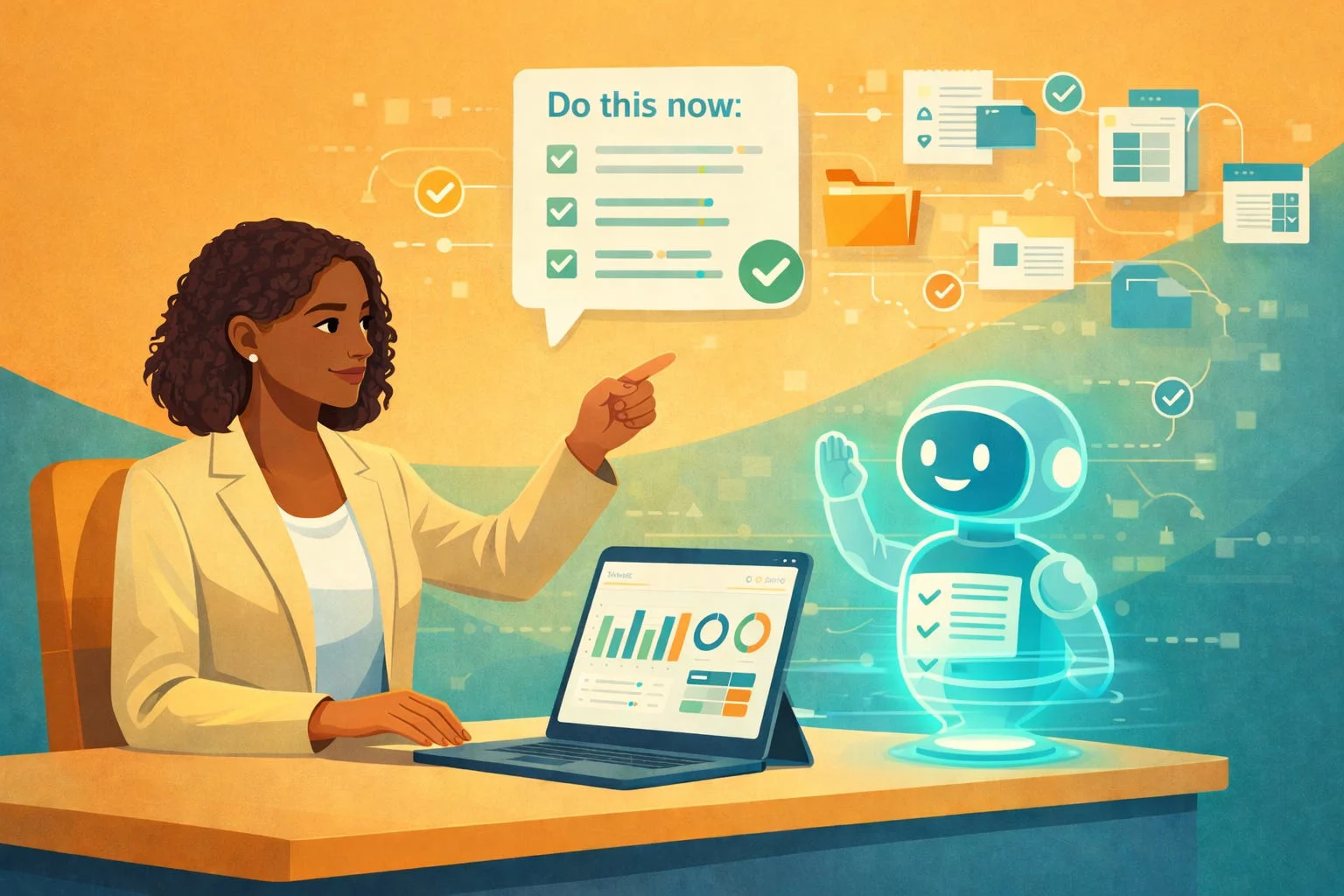
There's a phrase you hear a lot now in the AI world: "AI coworker." Or "AI teammate." Or "AI employee." Every other company seems to be launching one.
But the more I think about it, the more I think it's wrong.
A coworker, teammate, or employee isn’t just someone who works alongside you. They are someone who can take responsibility for something. If my coworker handles a customer call badly, I can reprimand him. If he keeps making expensive mistakes, I can fire him. If he steals from me, I can sue him. He can do the same to me. I can decide to do business with you for no logical reason other than I like you. That kind of responsibility requires education, experience, gut feel, instinct, wisdom, and many, many things no non-human has. AI doesn’t have judgement.
That last word matters. Judgement is what lets you be responsible. You can't hold something accountable for a decision it didn't really make. And making decisions is harder than it sounds. It isn't just processing inputs and producing outputs. It's looking at a piece of work and asking:
Is this good? Is this right? Do I feel it ? And that is subjective. It is a judgement call
AI can’t do that. Not really. It can produce work. It can produce a lot of work. It can do a lot of work over a long period of time with little or no supervision. For most of what I do, AI can already get me 90% of the way there. Maybe 95%. But the last 5% is the part that really matters, because it’s the part where I make a judgment call
Silicon Valley people call this taste. I like the word. Taste is the ability to tell the difference between work that is good and work that isn't. It's what separates a proposal you send to a client and one you bin. It's what separates an app people use from an app people install once. Whatever you call it — taste, judgement, experience — it's a human thing.
This is why I don't think "AI coworker" or "AI teammate" is the right way to talk about these tools. They're assistants. They help you do the work. They don't do the work in the sense that matters, which is the sense of being on the hook for it.
If you send an audit report to a regulator and it's full of errors, you can't blame the AI. If you publish a sloppy article, the byline is still yours. If you ship an app with purple gradients, no one will care that an AI made the design decisions.
I use Claude Code a lot. It writes better code than I do, probably by a wide margin. But it isn't my coworker. It's my assistant. I'm the one who decides what to build, what to keep, what to throw away. If Tyms bombs, That is on me.
A lot of what’s coming over the next few years is people figuring this out. The companies that win won’t just be the ones using AI. They’ll be the ones that have people with great taste, and then let those people use AI to get work done at a rate that wasn’t possible before
So at Tyms, we are NOT building AI coworkers or AI teammates. We're building AI assistants. The distinction sounds small but it isn't. One quietly suggests that the responsibility has moved. The other admits — we believe correctly — that it hasn't.
The day a machine can really judge its own work, decide whether something is good, and bear the consequences if it isn't — that's the day we have AGI. Until then, the work is still ours.
Comments
Be the first to comment.